The Chef's Playbook
The language of the kitchen.
The techniques behind our recipes, explained the way they are taught on the pass. Not just what to do, but why it works. Master these and every dish you cook improves.
Technique of the Week
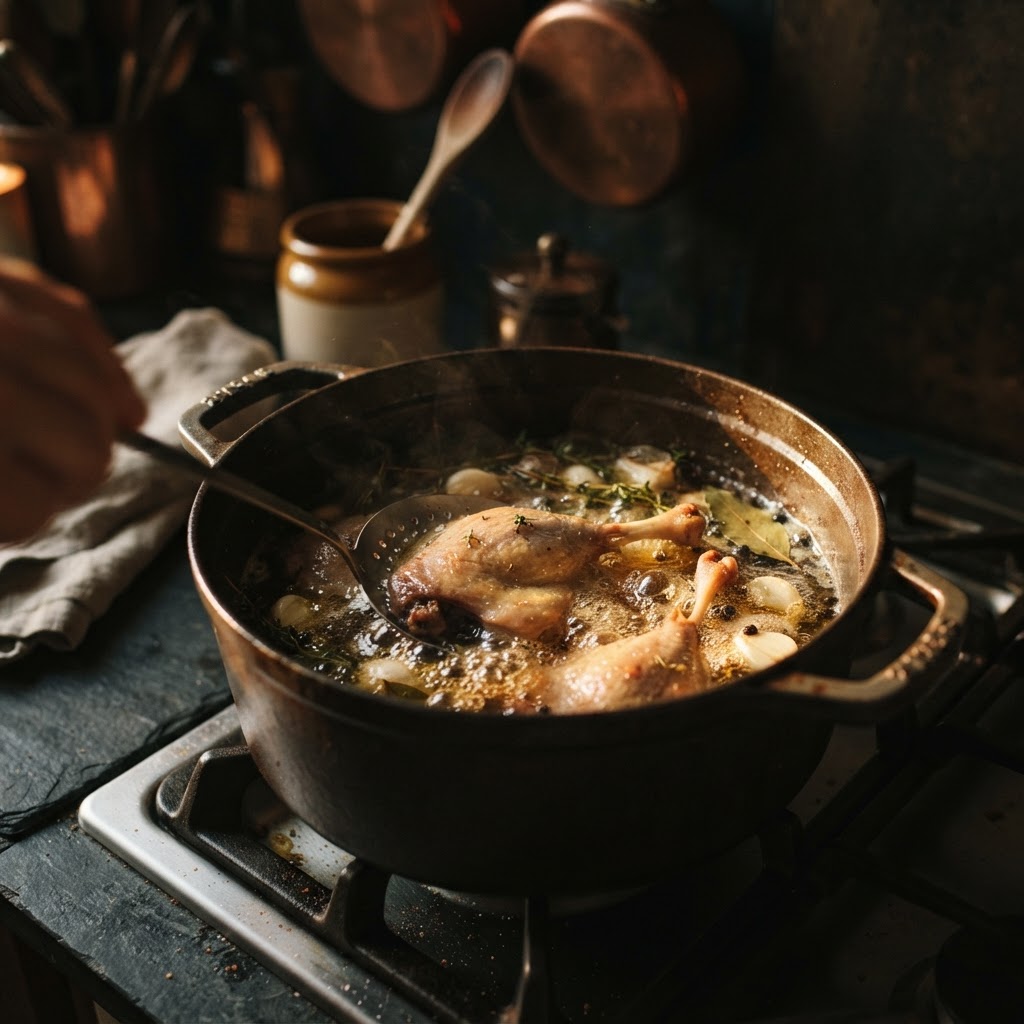
Confit
French · confire
Confit is the technique of cooking an ingredient submerged in fat at a low temperature for a long duration. This process gently breaks down the cell walls of the pumpkin while infusing it with flavor.
Learn the technique →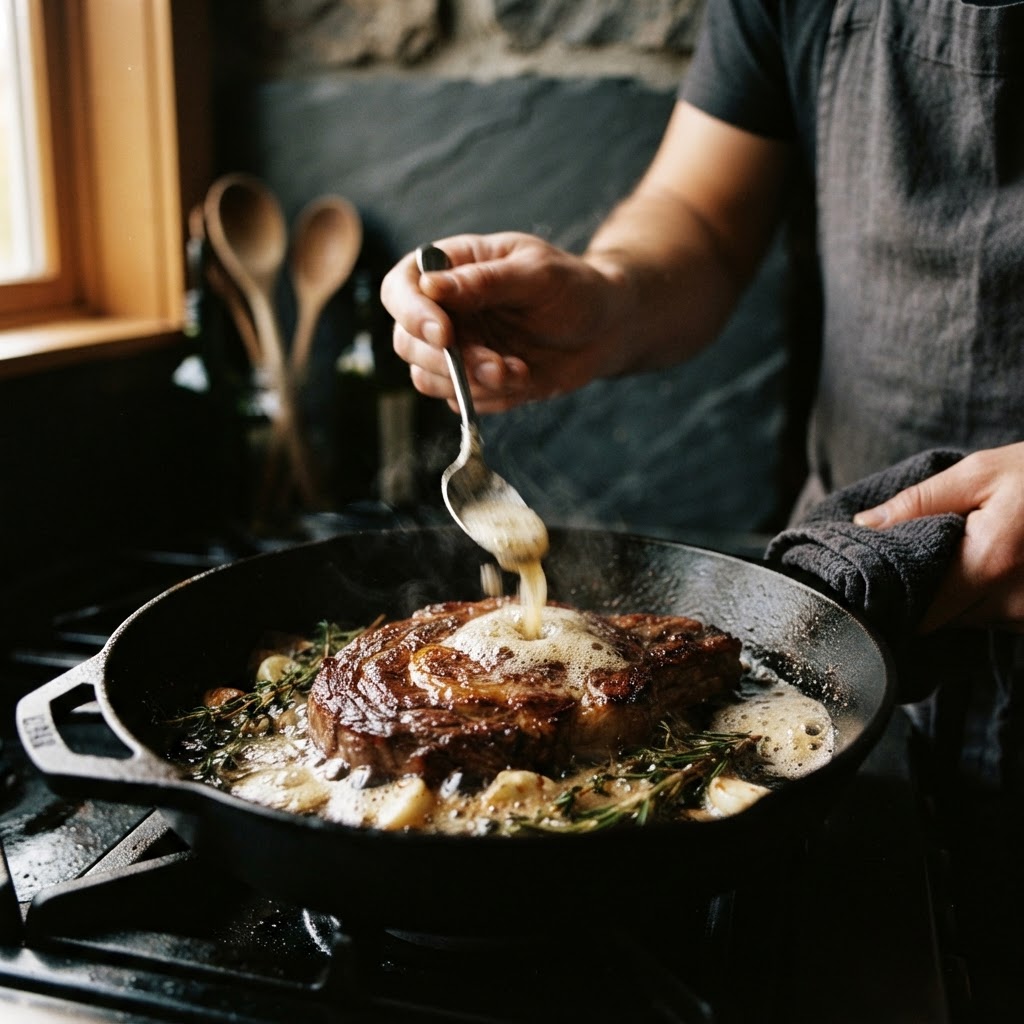
Heat
Arroser
French · to baste
Tilting the pan and spooning foaming butter, often perfumed with garlic and thyme, over meat or fish as it finishes cooking.
Why It Matters
The butter cooks the top surface gently while the pan handles the bottom, seasoning and basting in one motion. It is why restaurant proteins taste richer without tasting heavier.
Cook it: Pan-Seared Scallops with Lemon Butter, Mozambican Peri-Peri Prawns
Prep
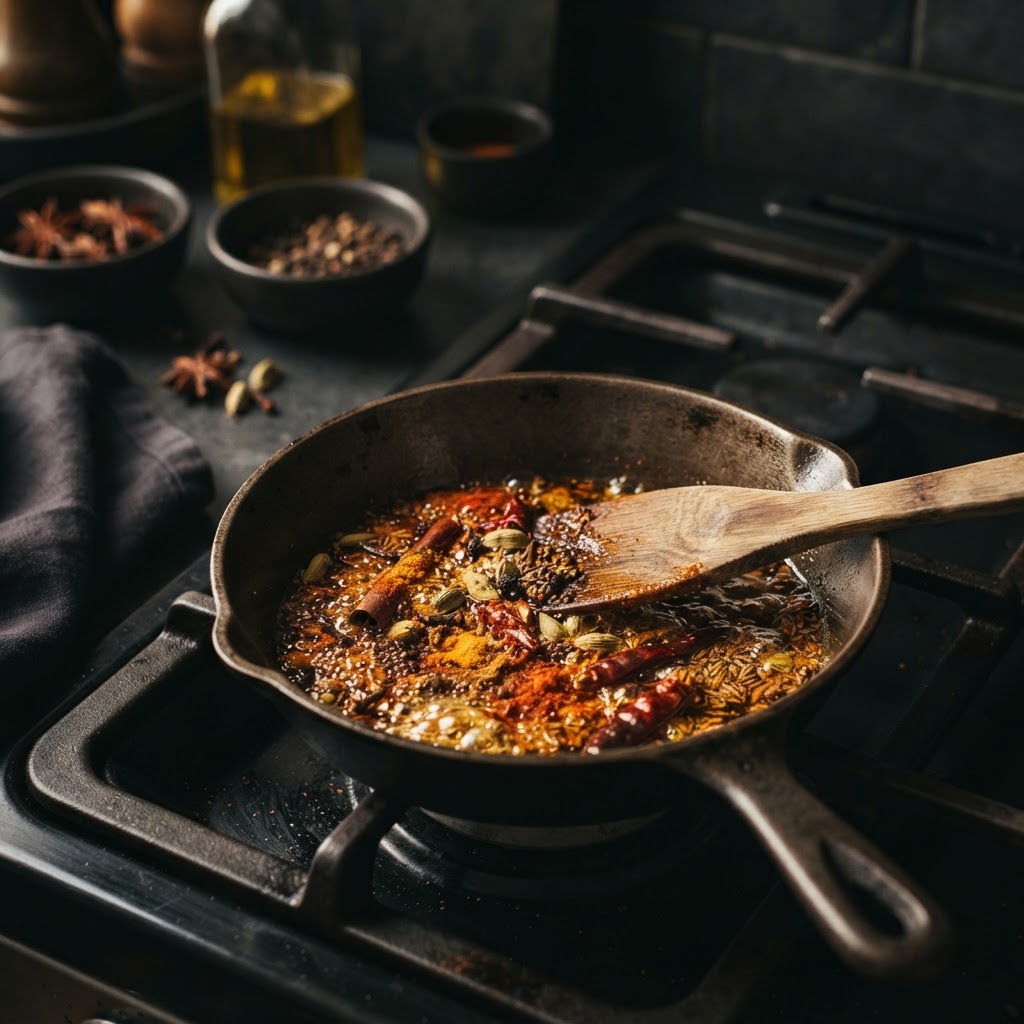
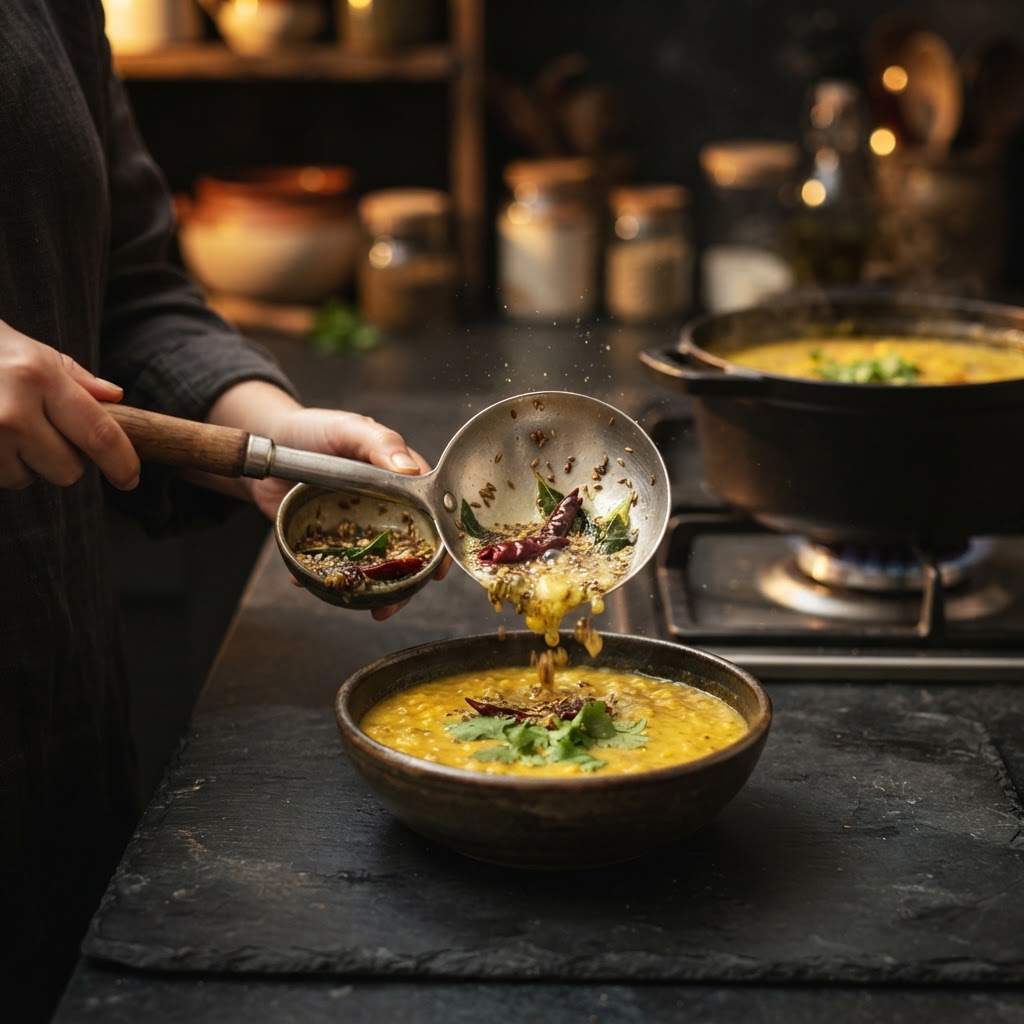
Blooming Spices
Heat before liquid
Toasting ground or whole spices briefly in hot fat before any liquid enters the pan, until they turn fragrant and a shade darker.
Why It Matters
Most of a spice's aromatic compounds are fat-soluble. Thirty seconds in warm oil releases what an hour of simmering in liquid never will.
Cook it: Arroz con Pato, Pho Ga
Heat
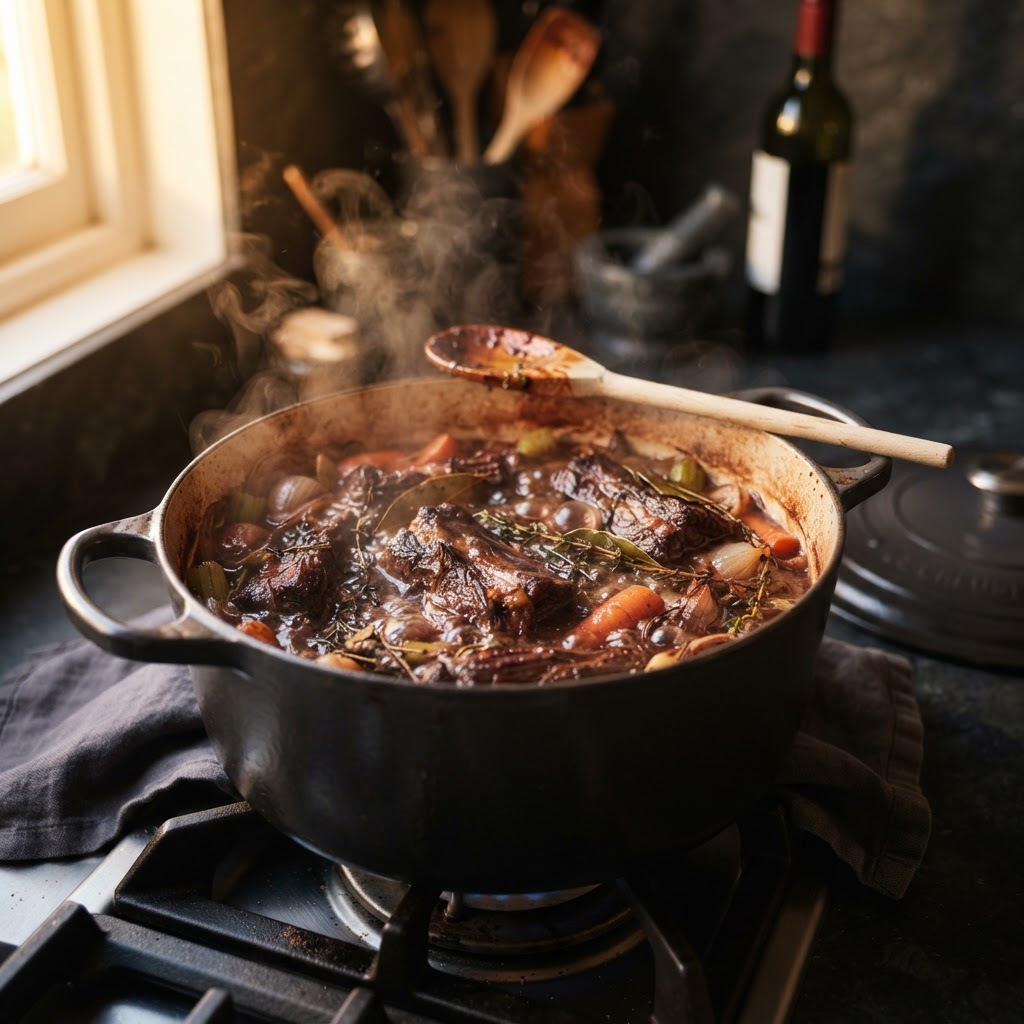
Braising
French · braiser
Braising is a combination cooking method that uses both dry and moist heat to break down tough fibers. It involves searing meat at high temperatures before simmering it in a small amount of liquid in a covered vessel.
Why It Matters
This technique transforms fibrous cuts like chuck roast into fork-tender results perfect for chili. It allows the complex flavors of the meat and vegetables to meld together into a cohesive sauce.
Cook it: Classic Chawanmushi, Carbonada Criolla
Prep
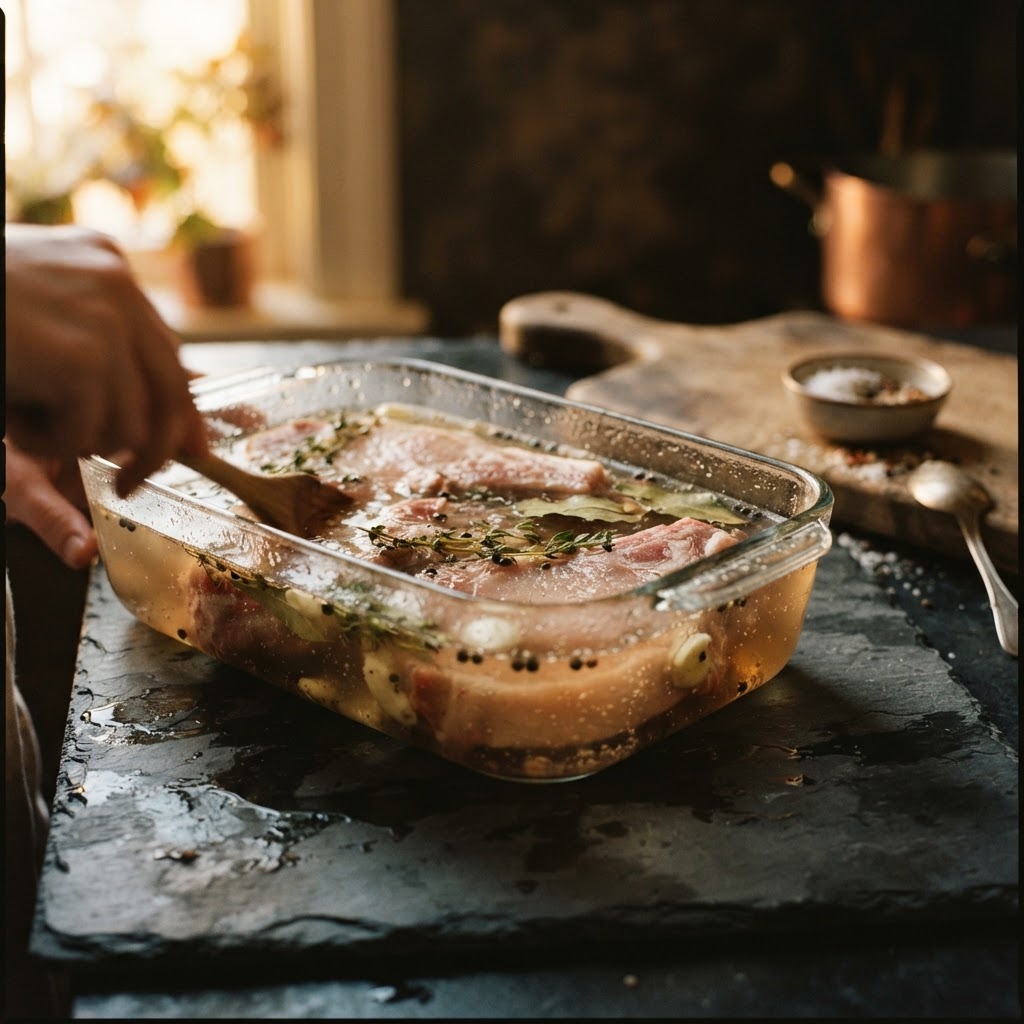
Brining
Seasoning from within
Soaking meat in salted water, or salting it well ahead of cooking, so seasoning penetrates deep into the muscle rather than sitting on the surface.
Why It Matters
Salt changes the protein structure itself, helping meat hold moisture through the heat. It is why restaurant chicken is seasoned to the bone and never dry.
Cook it: Gravlax with Mustard-Dill Sauce, Sauerbraten
Heat
Confit
French · confire
Confit is the technique of cooking an ingredient submerged in fat at a low temperature for a long duration. This process gently breaks down the cell walls of the pumpkin while infusing it with flavor.
Why It Matters
It transforms firm winter squash into a buttery, melt-in-the-mouth texture that is impossible to achieve with roasting alone. Because the pumpkin is insulated by the fat, it remains succulent and never dries out during the slow cooking process.
Cook it: Moqueca de Camaro, Osso Buco-Style Braised Veal Shanks
Sauces
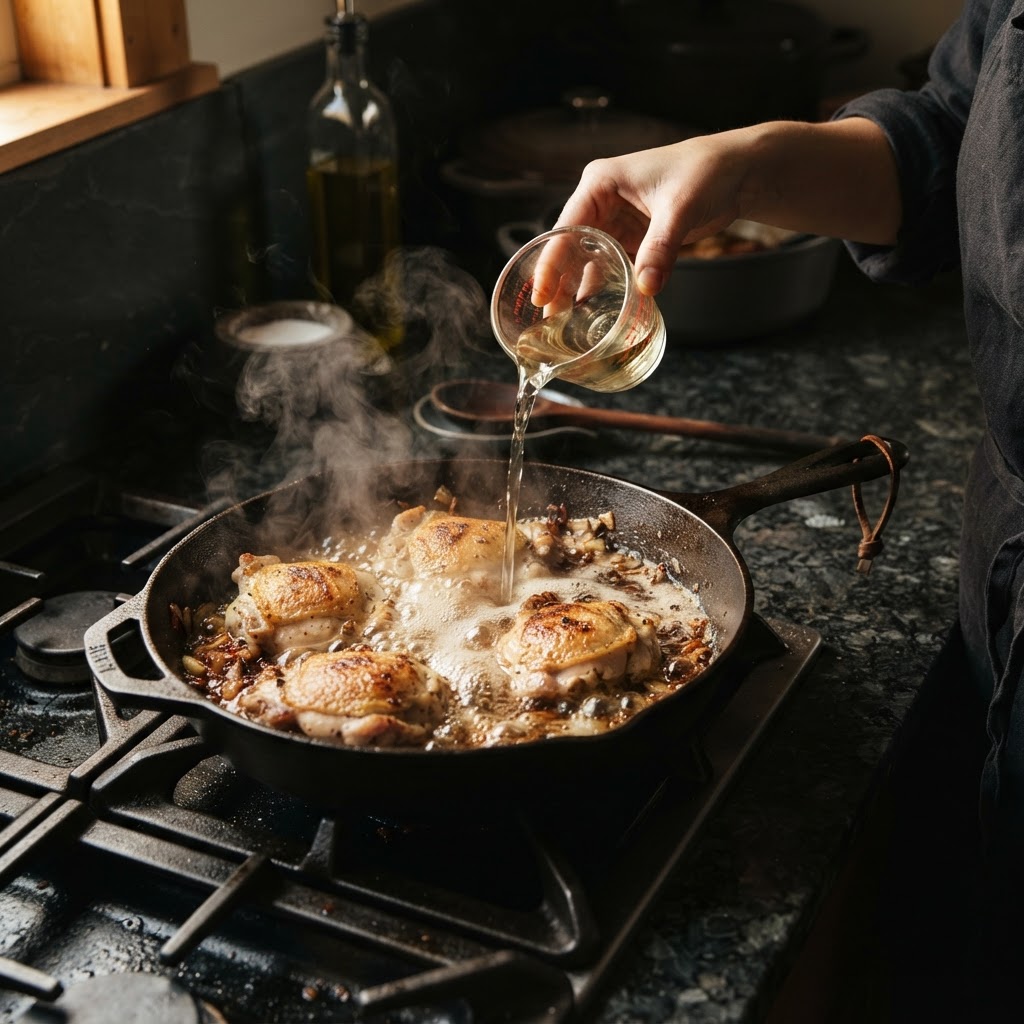
Deglazing
French · déglacer
Pouring wine, stock or even water into a hot pan to lift the browned residue left after searing, then reducing it into the base of a sauce.
Why It Matters
That residue, the fond, is concentrated flavor most home cooks wash down the drain. A thirty-second deglaze is the fastest route to a sauce that tastes like it simmered for hours.
Cook it: Lemon Garlic Butter Halibut, Pan-Seared Duck Breast with Cherry Reduction
Heat
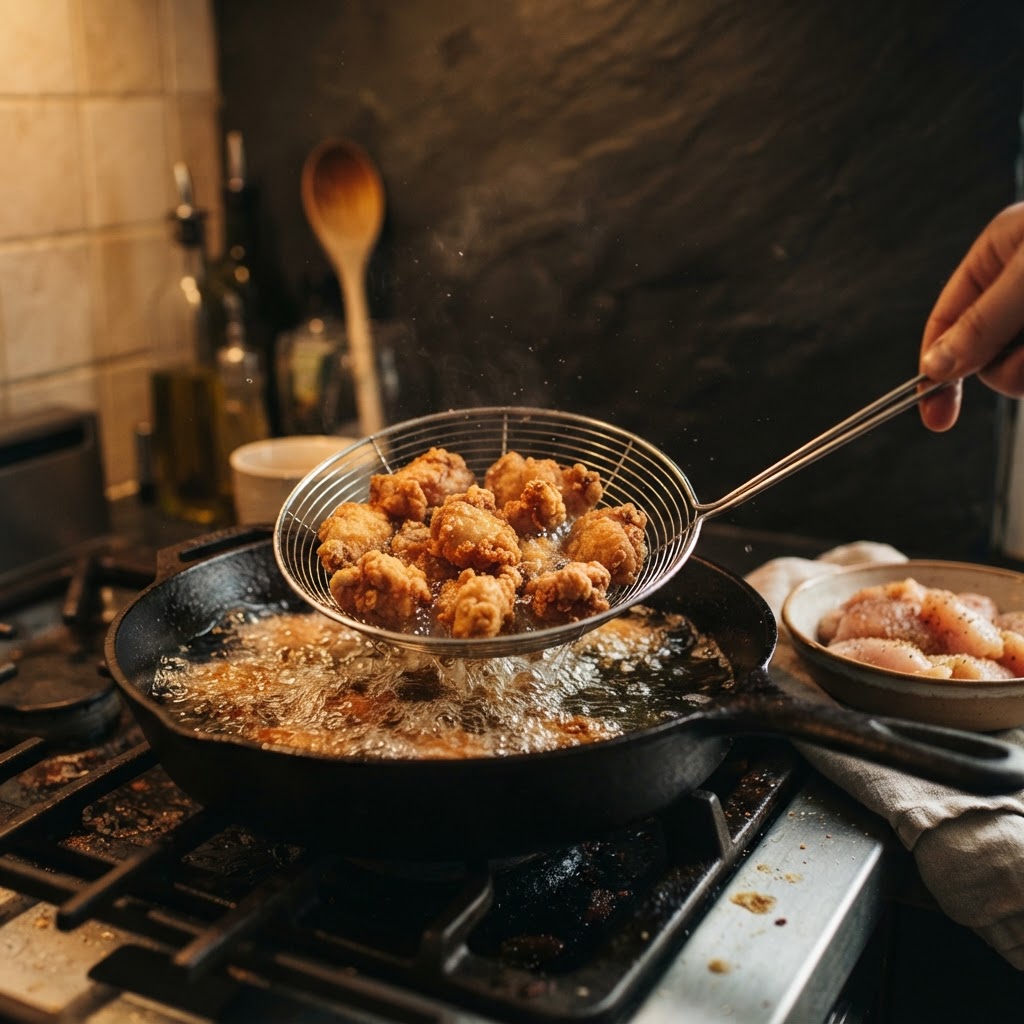
Double Frying
East Asian culinary tradition
Double frying is a method of cooking food in hot oil twice at different temperatures. This process ensures the interior is cooked through while creating a significantly crunchier outer shell.
Why It Matters
Single frying often results in a soggy crust or an undercooked center. Performing a two-stage fry allows you to manage heat levels to achieve a shatteringly crisp texture that holds up for longer periods.
Cook it: Chicken Kiev, Çökertme Kebabı
Sauces
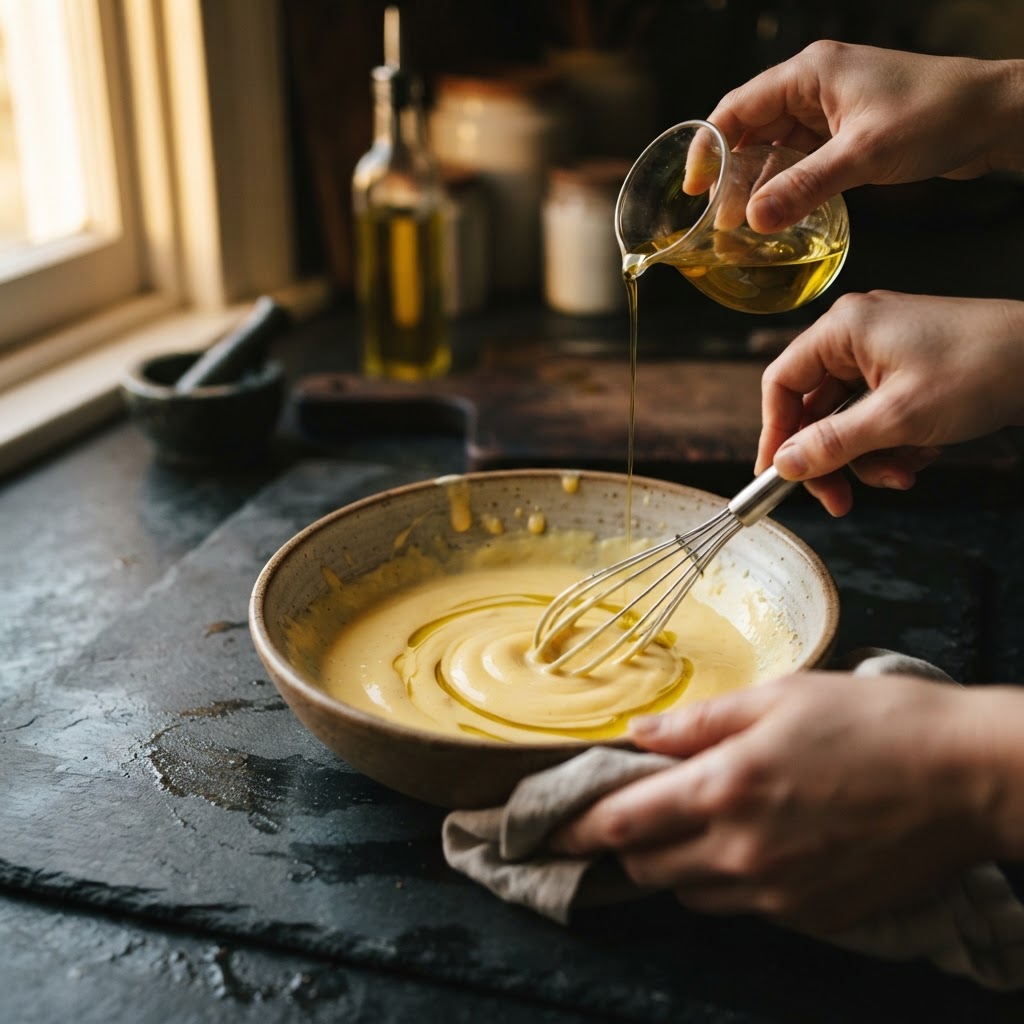
Emulsification
Binding the unbindable
Coaxing fat and liquid into one silky, stable sauce: butter whisked into a pan sauce, olive oil streamed into a vinaigrette, pasta water married to cheese.
Why It Matters
Emulsions carry flavor across the entire palate at once. It is the difference between a sauce that clings to the food and one that pools, broken, at the bottom of the plate.
Cook it: Smoked Salmon Eggs Benedict, Truffle-Scented Chawanmushi
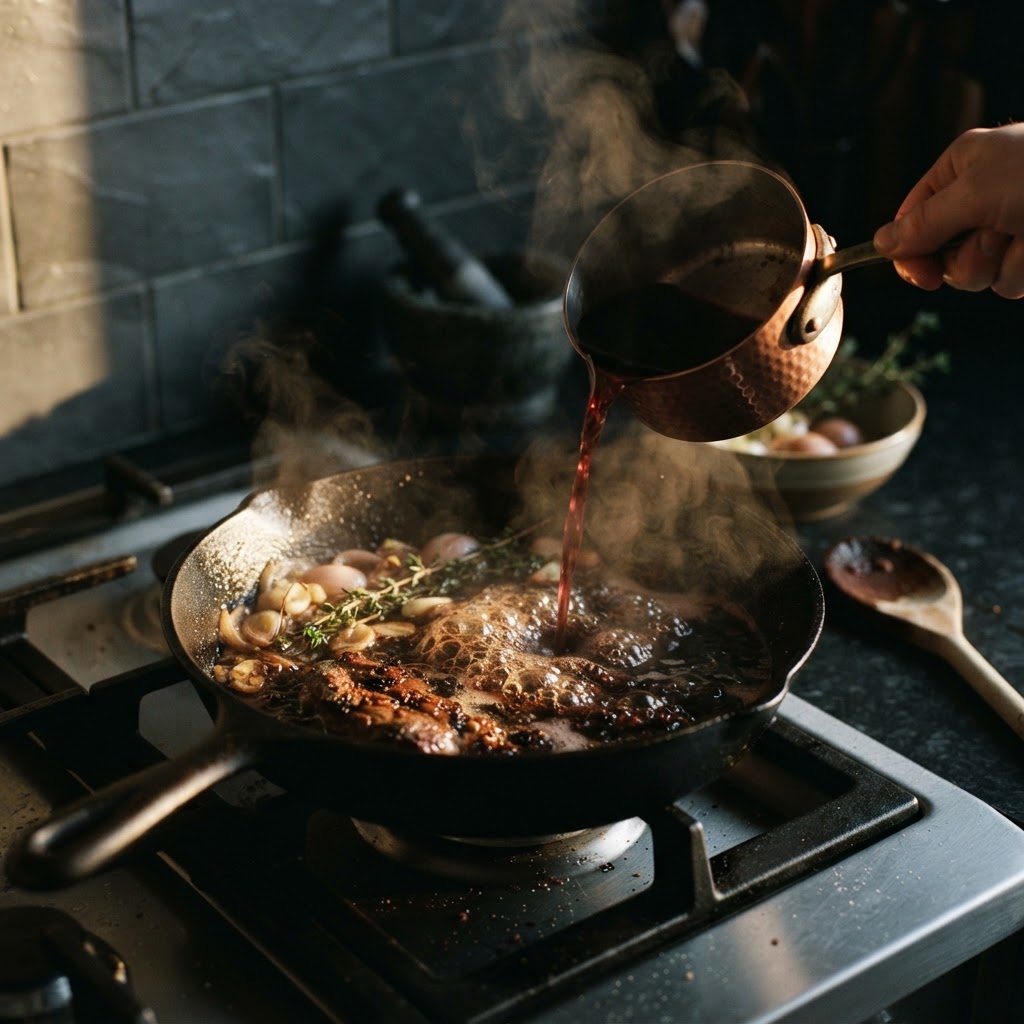
Sauces
Fond
French · the base
The caramelized layer of juices and proteins left on the pan after searing. In professional kitchens it is treated as an ingredient in its own right.
Why It Matters
Fond is the foundation of nearly every great pan sauce. Recognizing it, protecting it from burning, and deglazing it is a habit that upgrades everything you cook.
Cook it: Boeuf Bourguignon, French Onion Soup
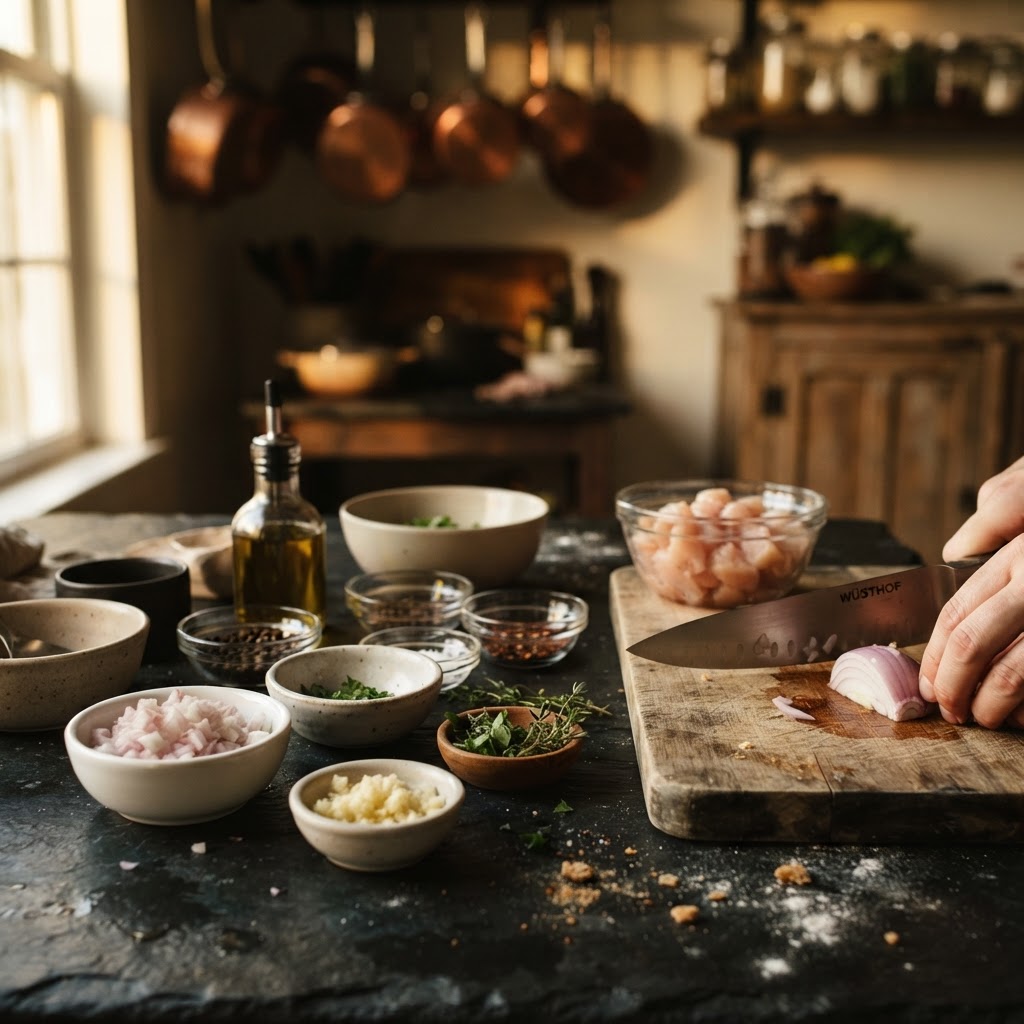
Prep
Mise en Place
French · everything in its place
Every ingredient measured, cut and arranged before the first pan touches the heat. In a starred kitchen, no chef begins a dish until the station is set.
Why It Matters
Most home cooking goes wrong in the scramble, not the recipe. When everything is within reach, you cook with your eyes and ears instead of the measuring cup, and timing becomes effortless.
Cook it: Involtini di Melanzane, Risotto agli Asparagi
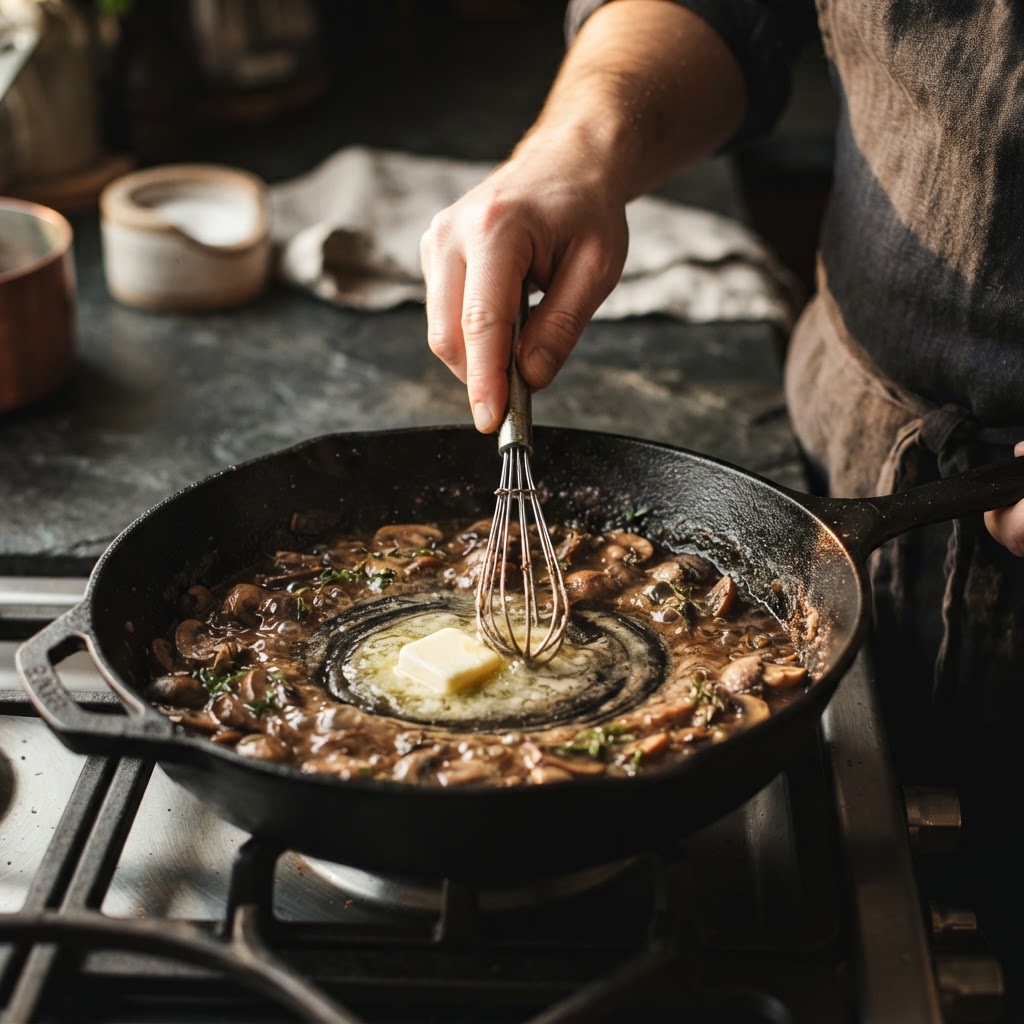
Sauces
Monter au Beurre
French · to mount with butter
Whisking cold butter, cube by cube, into a finished sauce off the heat until it turns glossy and full-bodied.
Why It Matters
The butter emulsifies rather than melts, giving the sauce a velvet texture and rounded finish. It is the quiet final step behind nearly every sauce served under a star.
Cook it: Bife à Romã, Lemon Garlic Butter Halibut
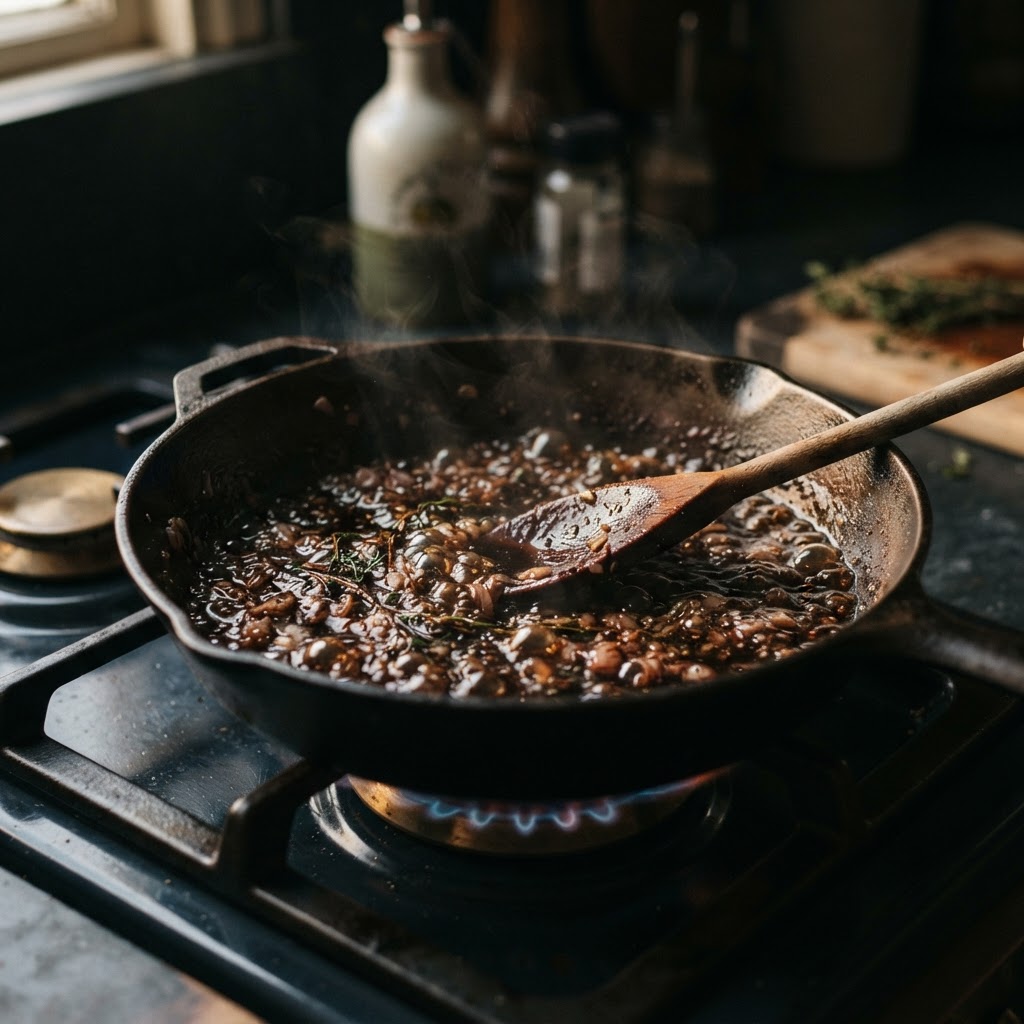
Sauces
Reduction
Concentration by evaporation
Simmering a liquid, wine, stock or cream, until water evaporates and what remains is thicker, glossier and far more intense.
Why It Matters
Flavor is not added here; it is revealed. A sauce reduced by half tastes twice as focused, and it coats a spoon the way a great sauce should.
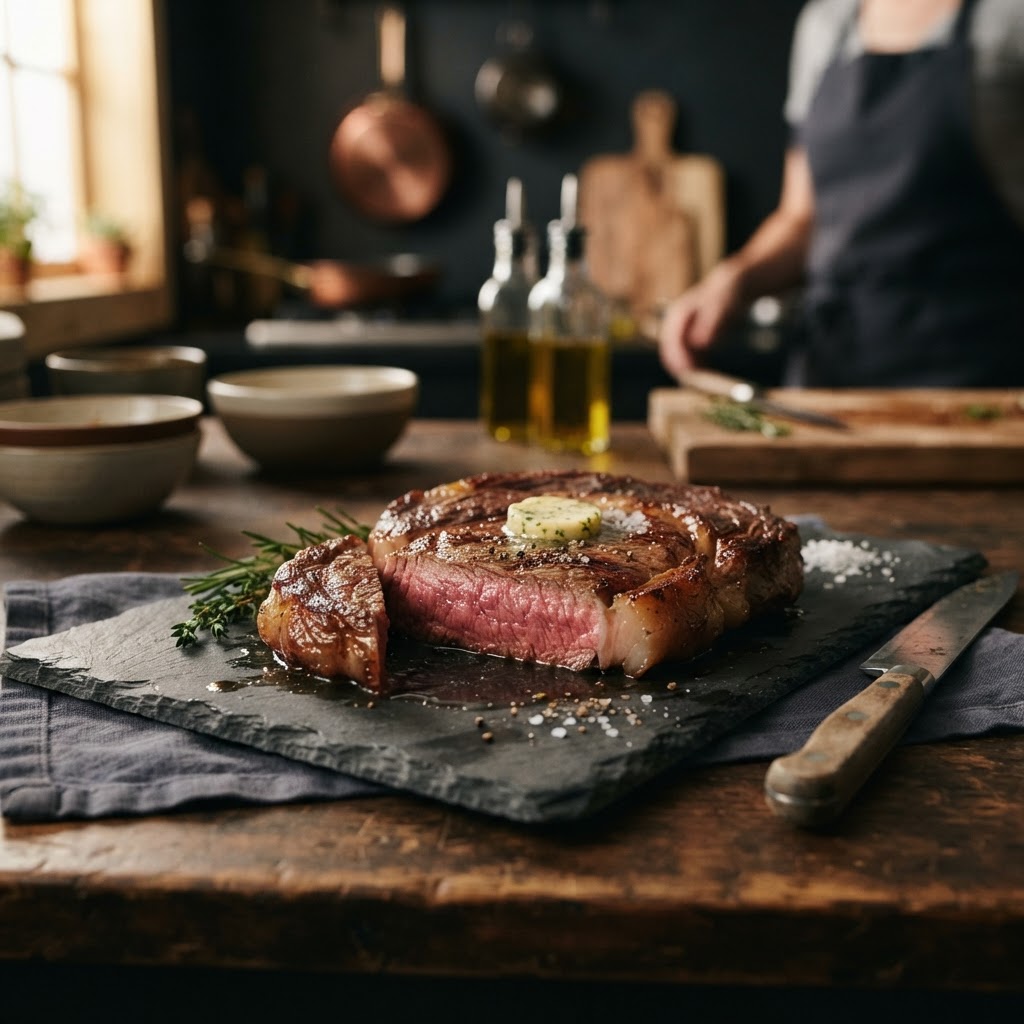
Prep
Resting Meat
Patience as technique
Letting cooked meat sit off the heat, loosely covered, for a third of its cooking time before slicing.
Why It Matters
Heat drives juices toward the center of the cut. Resting lets them redistribute, so they end up on your palate instead of the cutting board.
Cook it: Pan-Seared Duck Breast with Cherry Reduction, Tarte Tatin with Crème Fraîche
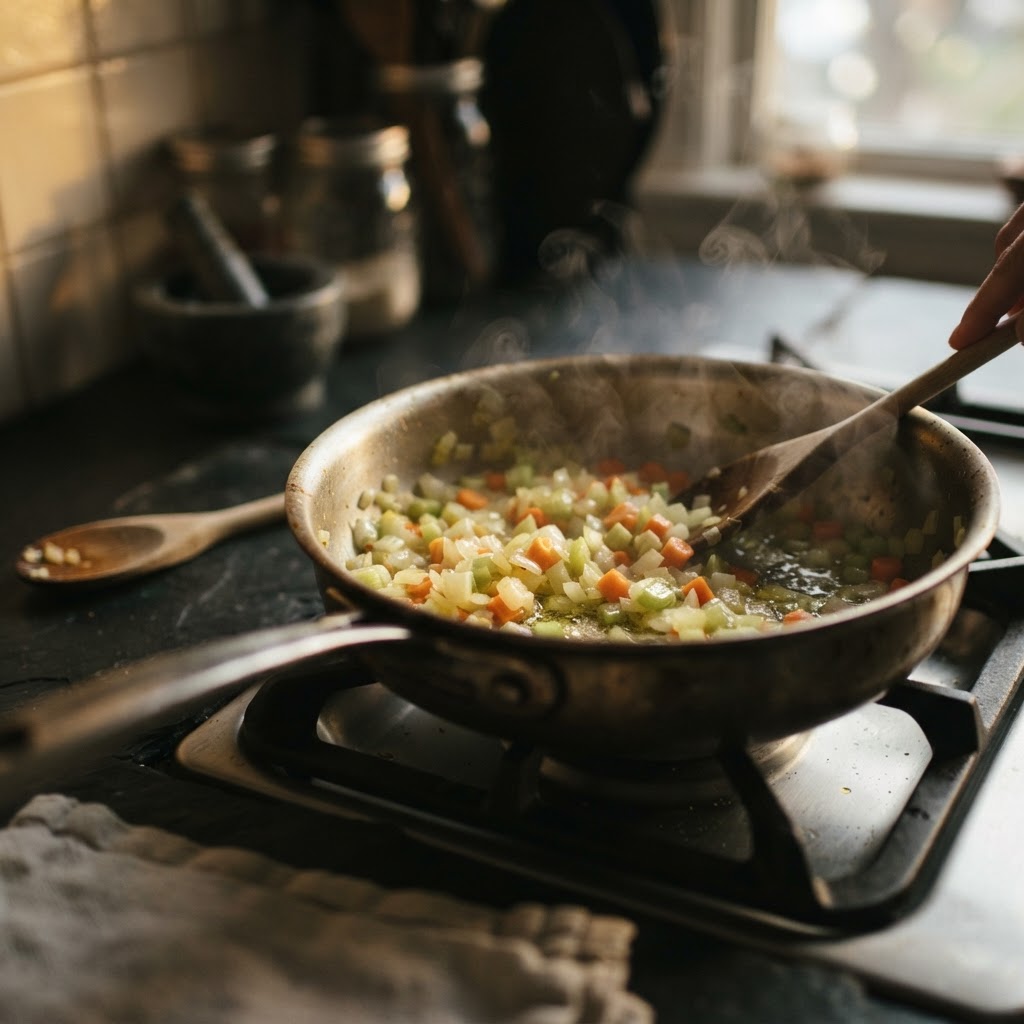
Heat
Sweating
French · suer
Sweating is the gentle heating of vegetables in a fat over low heat. This technique softens the ingredients without browning them, allowing them to release their natural moisture.
Why It Matters
It builds a sweet, mellow base for your chili by breaking down aromatics like onions and peppers. Preventing color development keeps the flavor profile clean and prevents harsh, burnt notes in the final pot.
Cook it: Moqueca de Camaro, Pork Sisig
Prep
Tempering
Meeting heat halfway
Slowly raising the temperature of a delicate ingredient, whisking hot liquid gradually into eggs, or letting a steak lose its chill before the pan.
Why It Matters
Sudden heat is what curdles custards and greys the inside of a steak. Gentle transitions keep textures exactly where a chef wants them.
Cook it: Ojo de Bife (Ribeye Steak), Ugnstekt Lax med Dillcrème
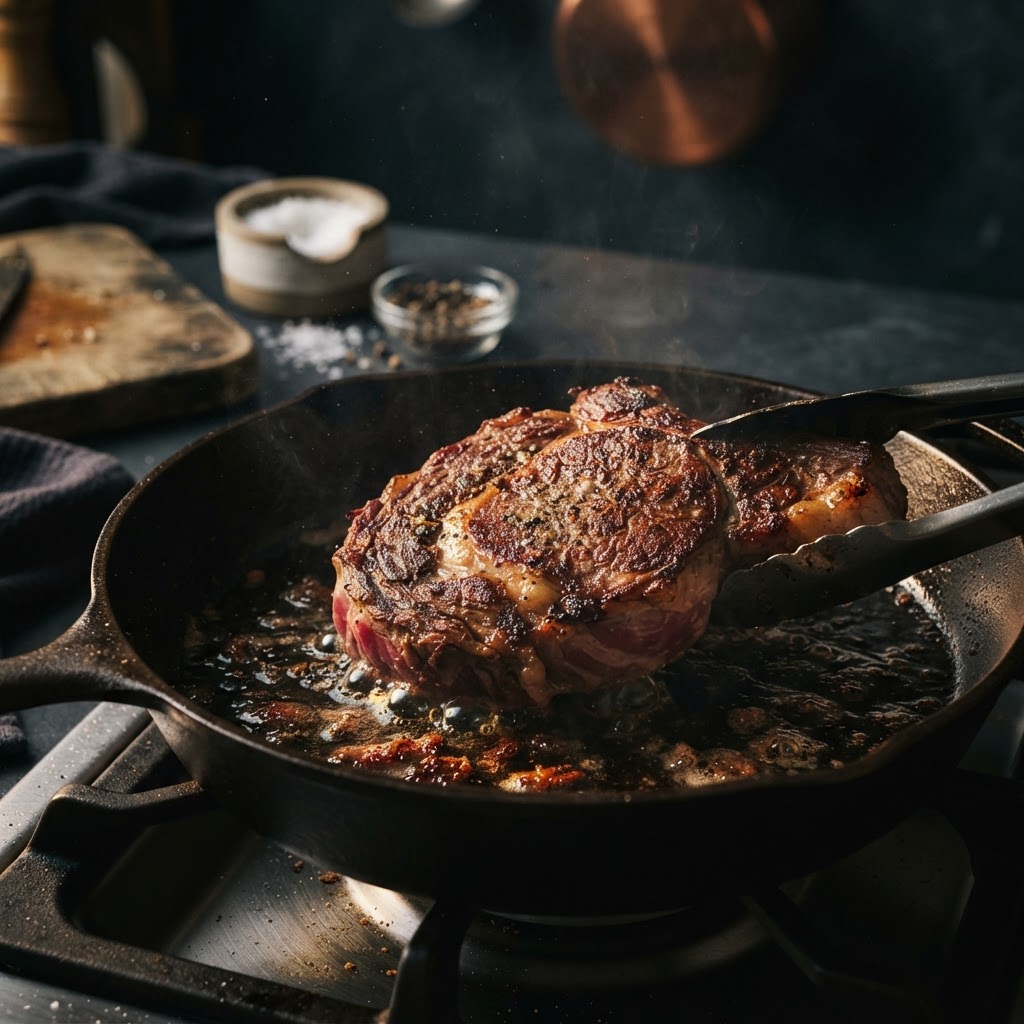
Heat
The Maillard Reaction
The science of browning
The chemical reaction between proteins and sugars at high heat that turns a steak's crust deep mahogany and makes roasted onions taste sweet and complex.
Why It Matters
Browning is flavor being created, not just color. A dry surface, a hot pan and the patience not to move the food are worth more than any single ingredient you could add.
Cook it: Matambre Arrollado (Rolled Stuffed Flank Steak), Bistecca alla Fiorentina with Rosemary Oil
See these techniques at work in the kitchen.
Browse the Recipes →