The Chef's Playbook
The language of the kitchen.
The techniques behind our recipes, explained the way they are taught on the pass. Not just what to do, but why it works. Master these and every dish you cook improves.
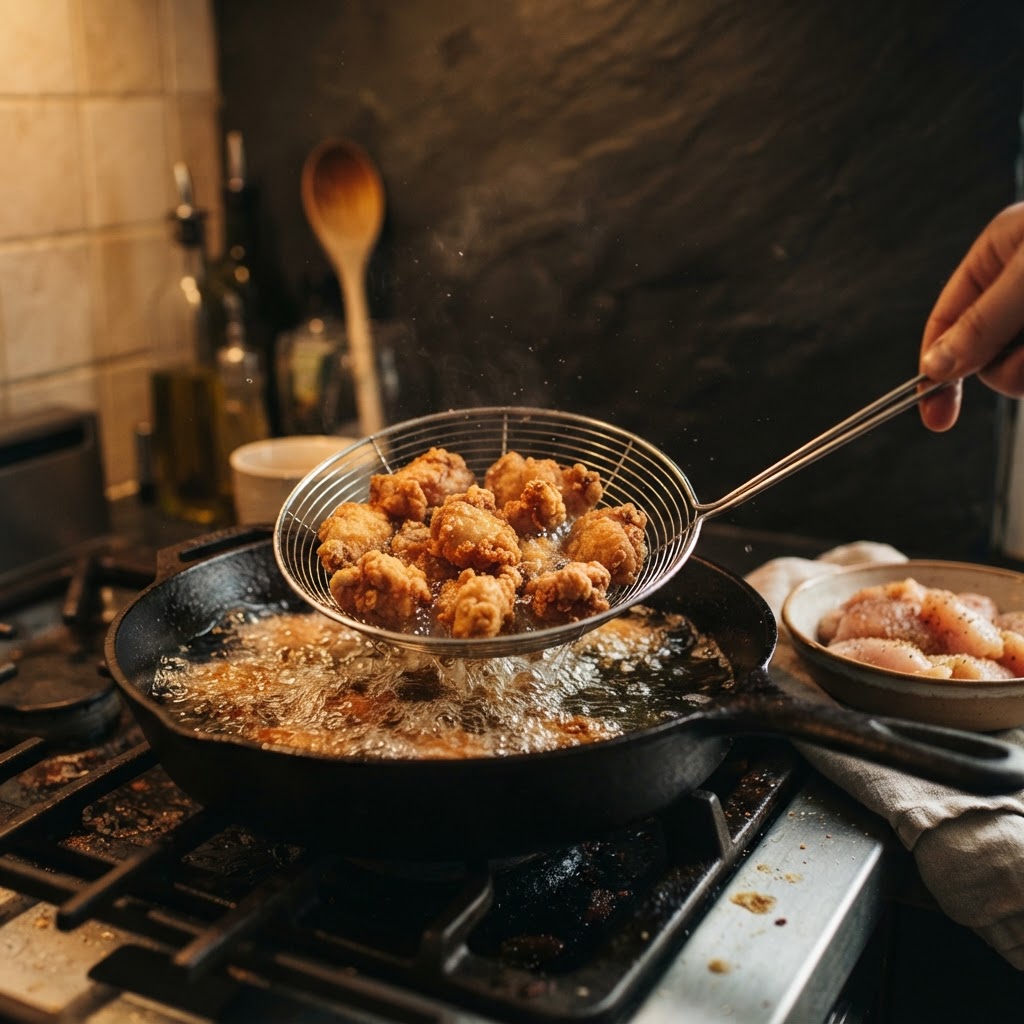
Technique of the Week
Double Frying
East Asian culinary tradition
Double frying is a method of cooking food in hot oil twice at different temperatures. This process ensures the interior is cooked through while creating a significantly crunchier outer shell.
Learn the technique →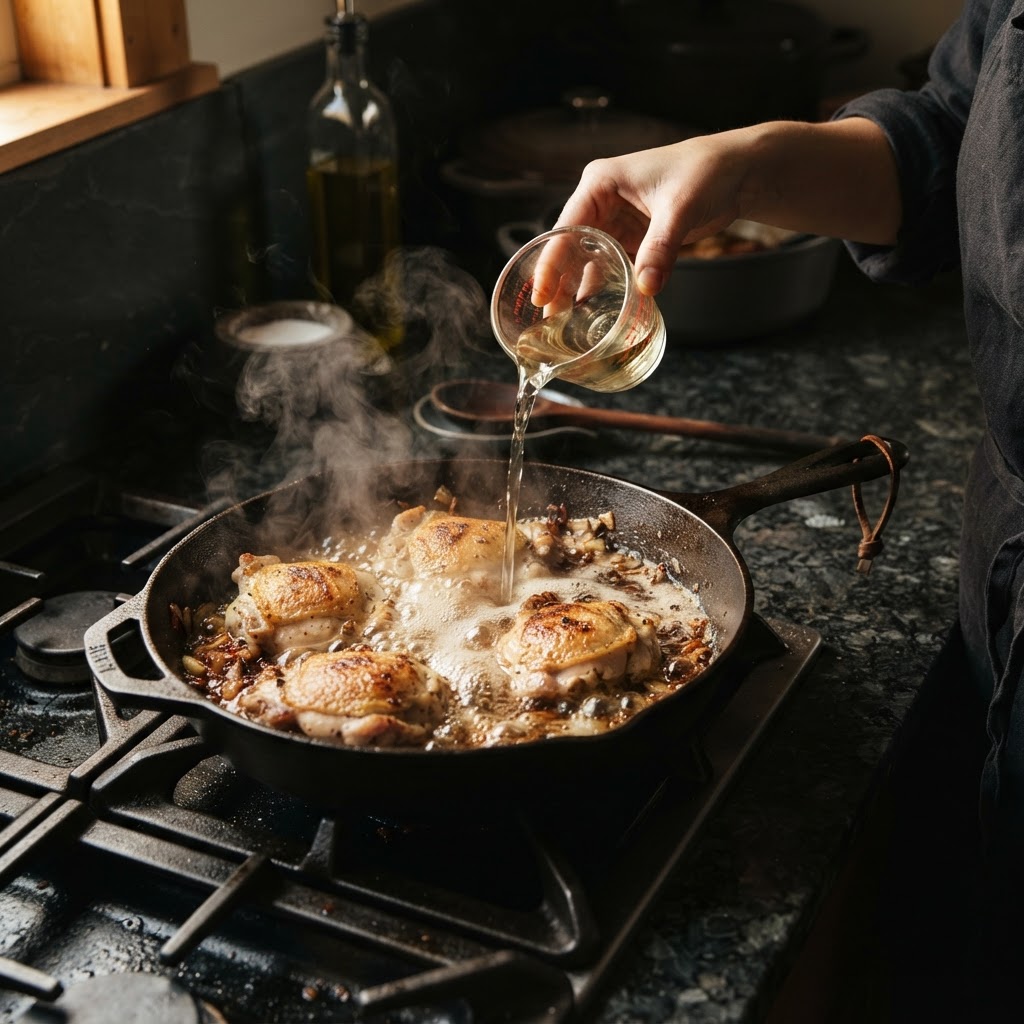
Sauces
Deglazing
French · déglacer
Pouring wine, stock or even water into a hot pan to lift the browned residue left after searing, then reducing it into the base of a sauce.
Why It Matters
That residue, the fond, is concentrated flavor most home cooks wash down the drain. A thirty-second deglaze is the fastest route to a sauce that tastes like it simmered for hours.
Cook it: Lemon Garlic Butter Halibut, Pan-Seared Duck Breast with Cherry Reduction
Sauces
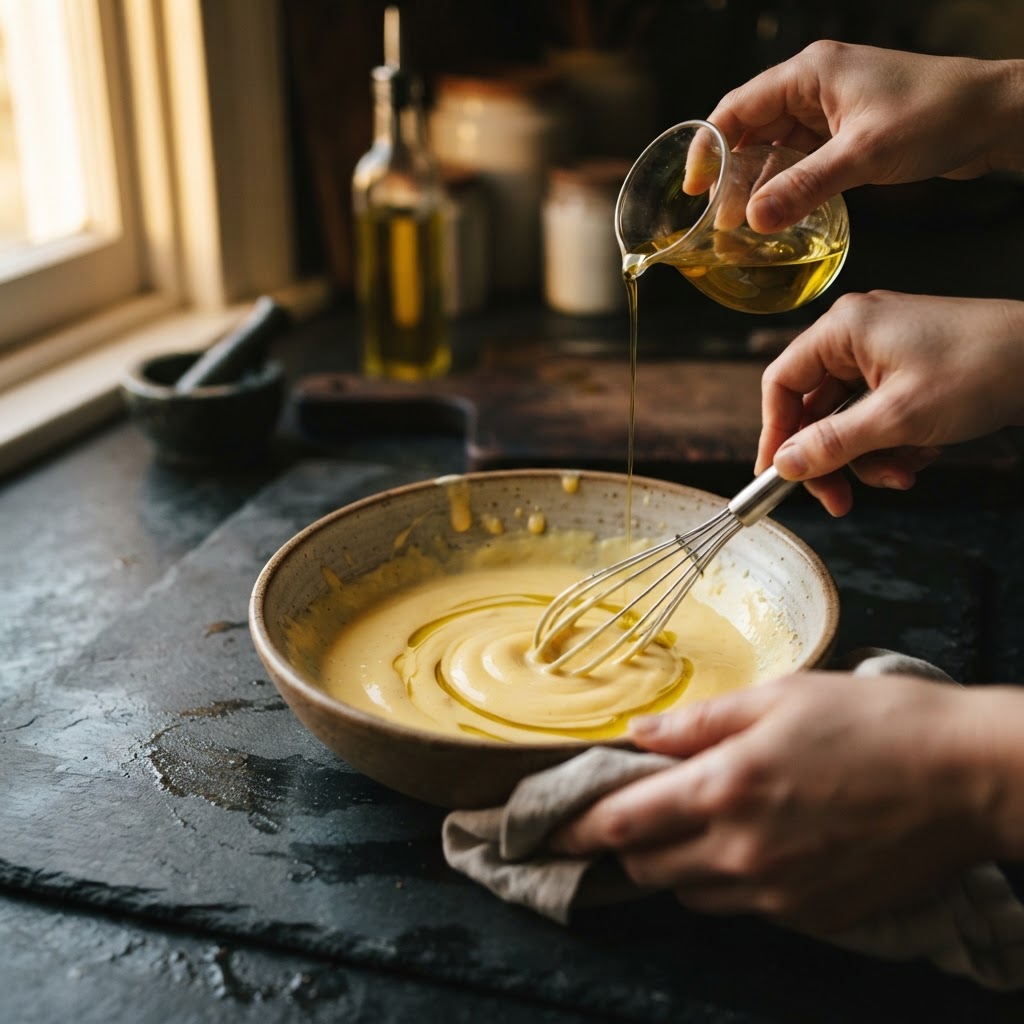
Emulsification
Binding the unbindable
Coaxing fat and liquid into one silky, stable sauce: butter whisked into a pan sauce, olive oil streamed into a vinaigrette, pasta water married to cheese.
Why It Matters
Emulsions carry flavor across the entire palate at once. It is the difference between a sauce that clings to the food and one that pools, broken, at the bottom of the plate.
Cook it: Smoked Salmon Eggs Benedict, Truffle-Scented Chawanmushi
Sauces
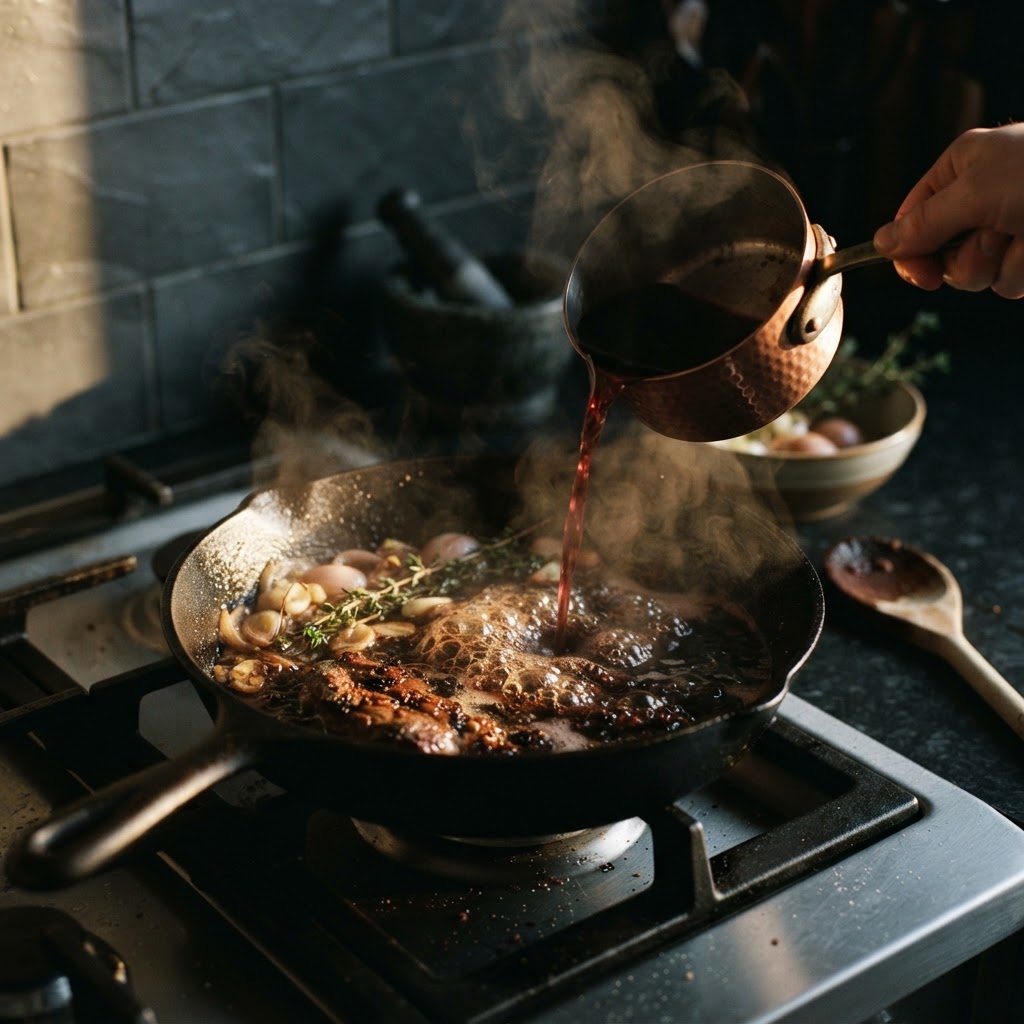
Fond
French · the base
The caramelized layer of juices and proteins left on the pan after searing. In professional kitchens it is treated as an ingredient in its own right.
Why It Matters
Fond is the foundation of nearly every great pan sauce. Recognizing it, protecting it from burning, and deglazing it is a habit that upgrades everything you cook.
Cook it: Boeuf Bourguignon, French Onion Soup
Sauces
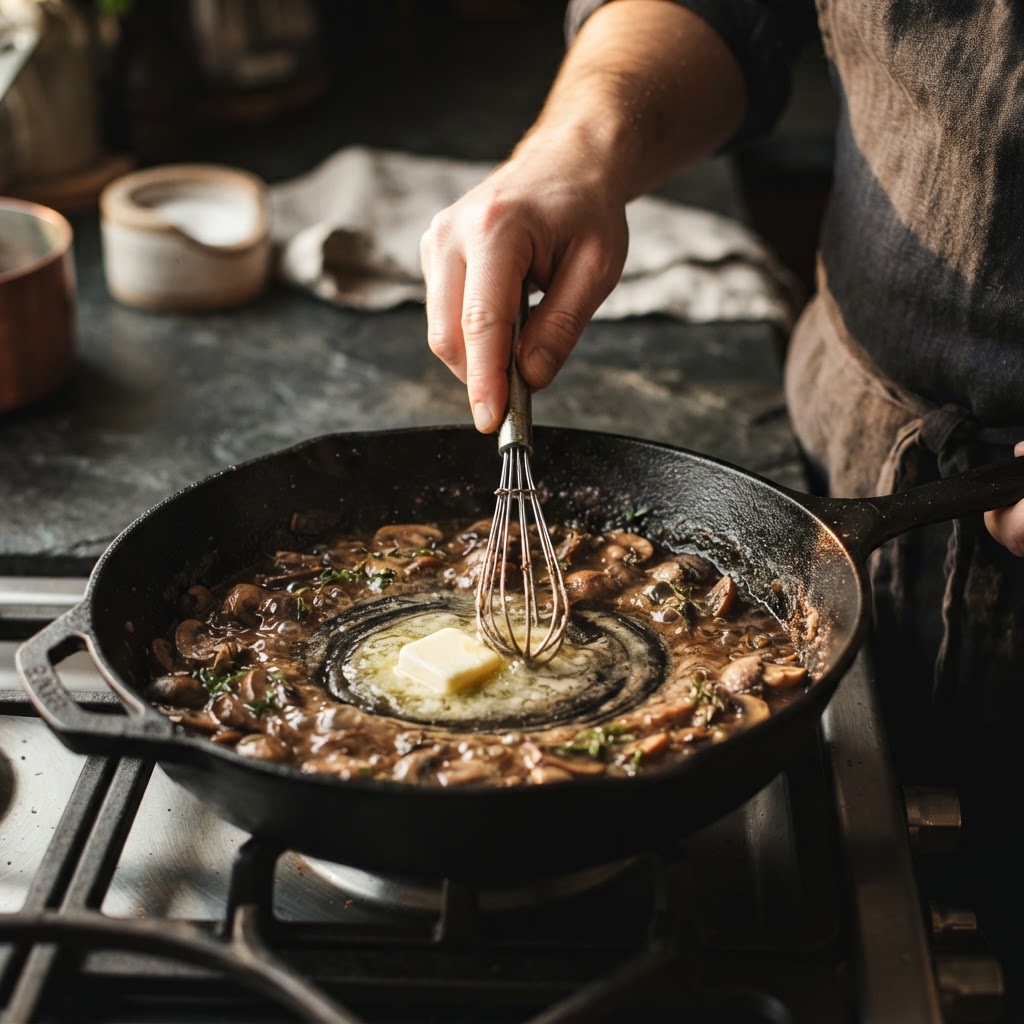
Monter au Beurre
French · to mount with butter
Whisking cold butter, cube by cube, into a finished sauce off the heat until it turns glossy and full-bodied.
Why It Matters
The butter emulsifies rather than melts, giving the sauce a velvet texture and rounded finish. It is the quiet final step behind nearly every sauce served under a star.
Cook it: Bife à Romã, Lemon Garlic Butter Halibut
Sauces
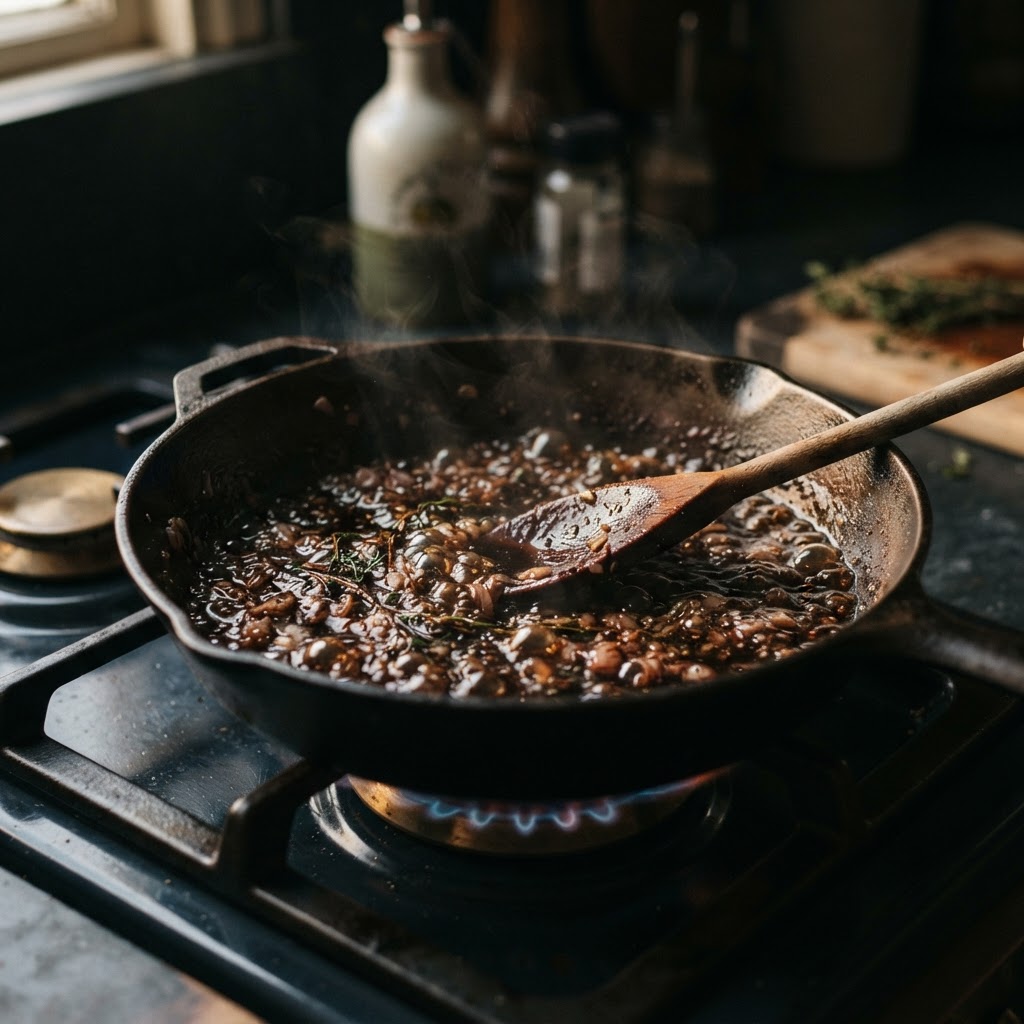
Reduction
Concentration by evaporation
Simmering a liquid, wine, stock or cream, until water evaporates and what remains is thicker, glossier and far more intense.
Why It Matters
Flavor is not added here; it is revealed. A sauce reduced by half tastes twice as focused, and it coats a spoon the way a great sauce should.
See these techniques at work in the kitchen.
Browse the Recipes →