The Chef's Playbook
The language of the kitchen.
The techniques behind our recipes, explained the way they are taught on the pass. Not just what to do, but why it works. Master these and every dish you cook improves.
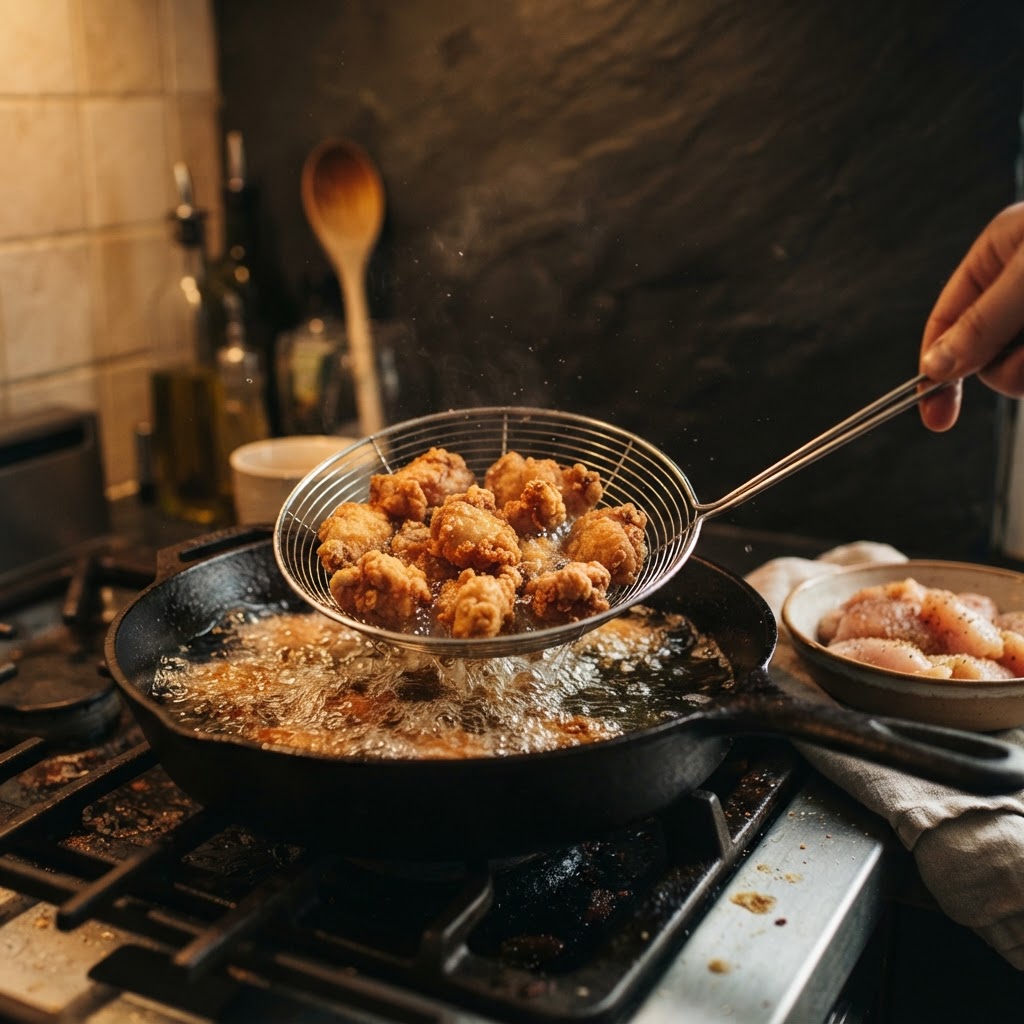
Technique of the Week
Double Frying
East Asian culinary tradition
Double frying is a method of cooking food in hot oil twice at different temperatures. This process ensures the interior is cooked through while creating a significantly crunchier outer shell.
Learn the technique →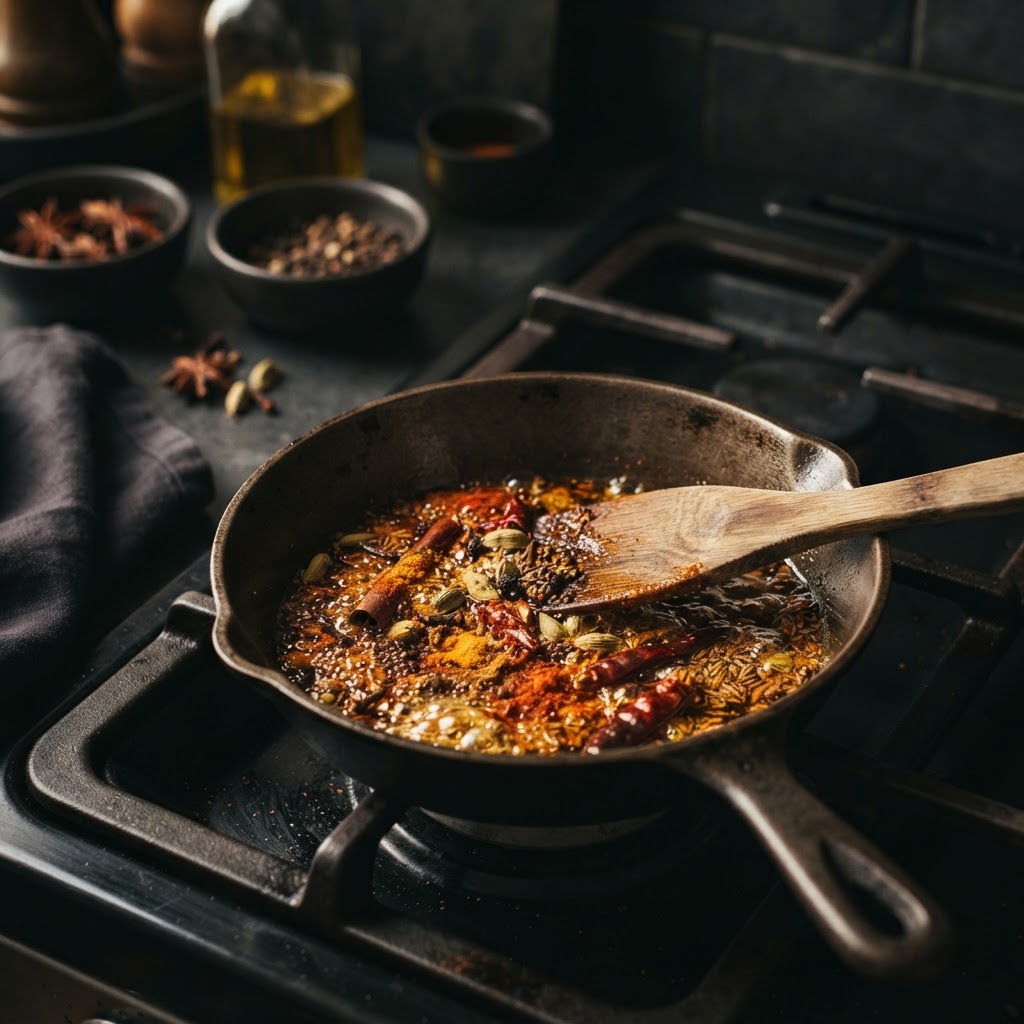
Prep
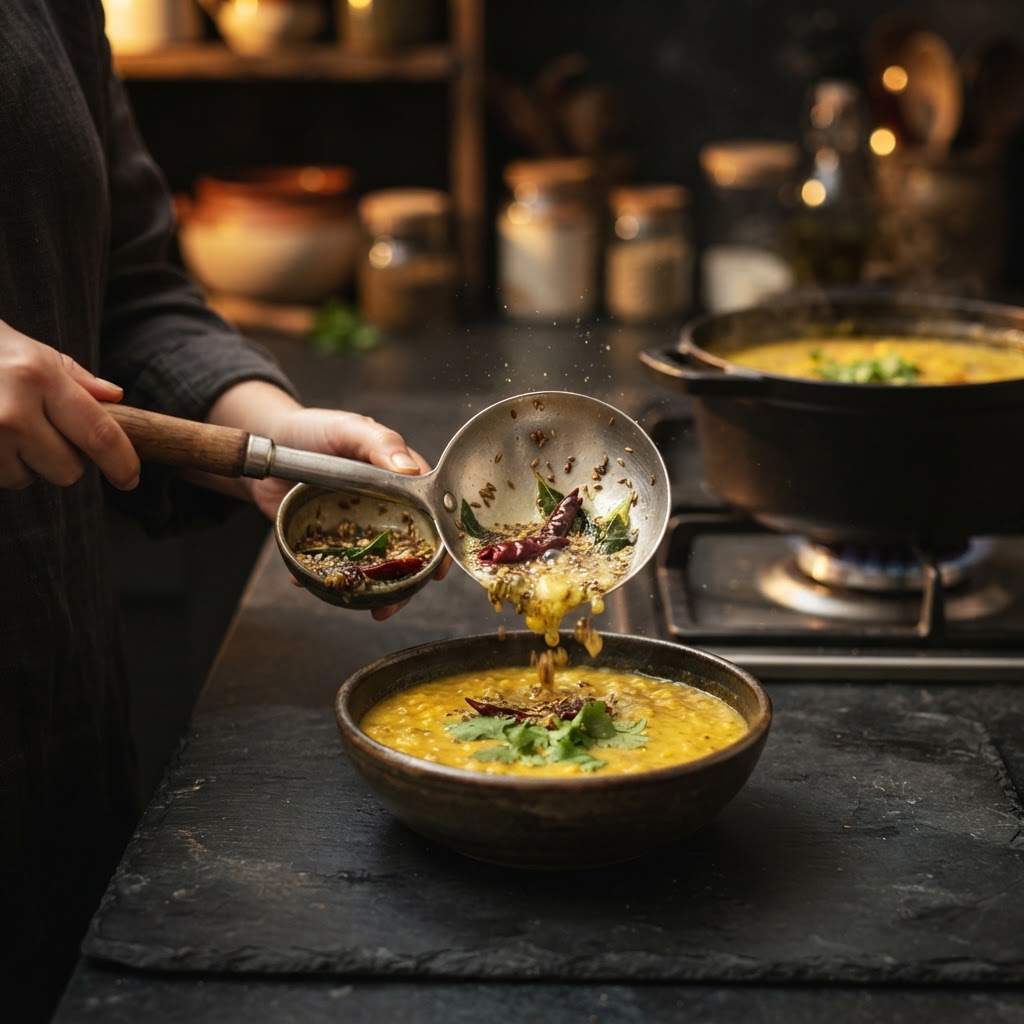
Blooming Spices
Heat before liquid
Toasting ground or whole spices briefly in hot fat before any liquid enters the pan, until they turn fragrant and a shade darker.
Why It Matters
Most of a spice's aromatic compounds are fat-soluble. Thirty seconds in warm oil releases what an hour of simmering in liquid never will.
Cook it: Arroz con Pato, Pho Ga
Prep
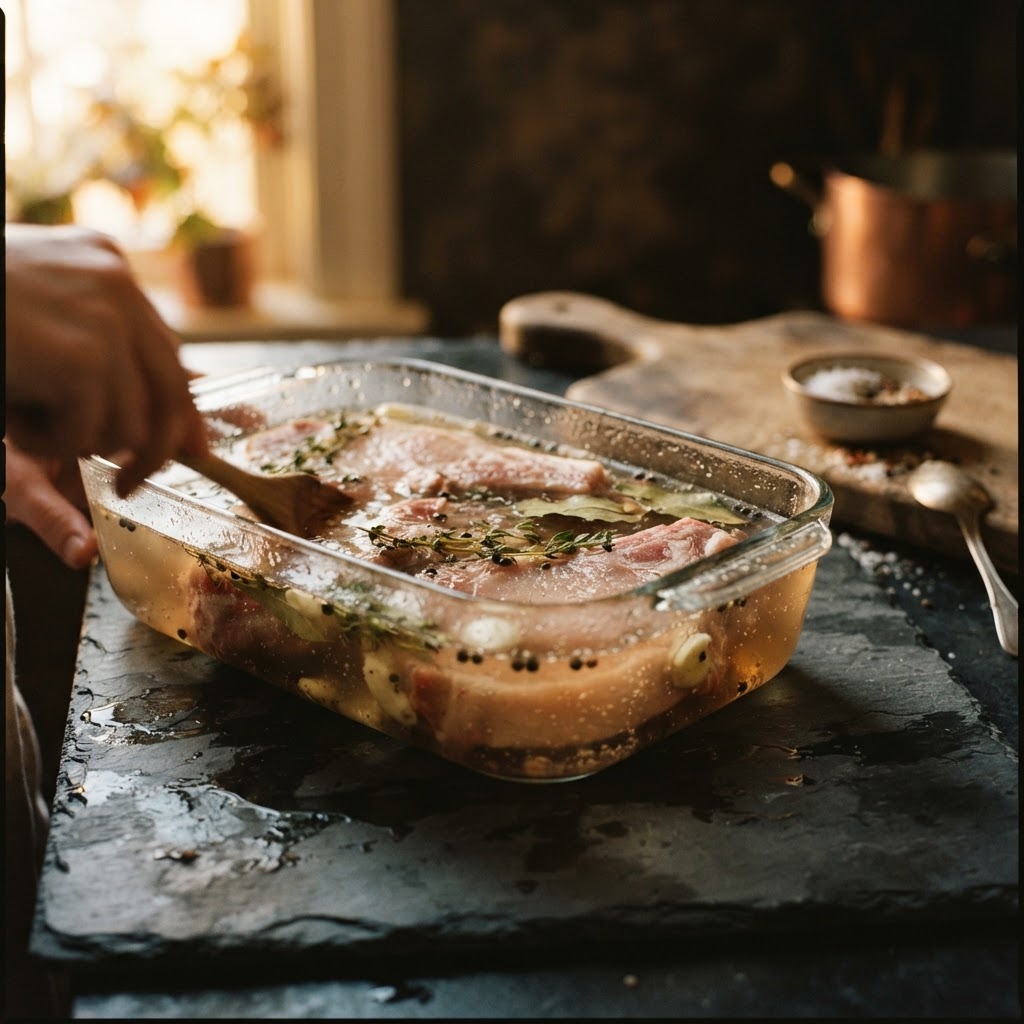
Brining
Seasoning from within
Soaking meat in salted water, or salting it well ahead of cooking, so seasoning penetrates deep into the muscle rather than sitting on the surface.
Why It Matters
Salt changes the protein structure itself, helping meat hold moisture through the heat. It is why restaurant chicken is seasoned to the bone and never dry.
Cook it: Gravlax with Mustard-Dill Sauce, Sauerbraten
Prep
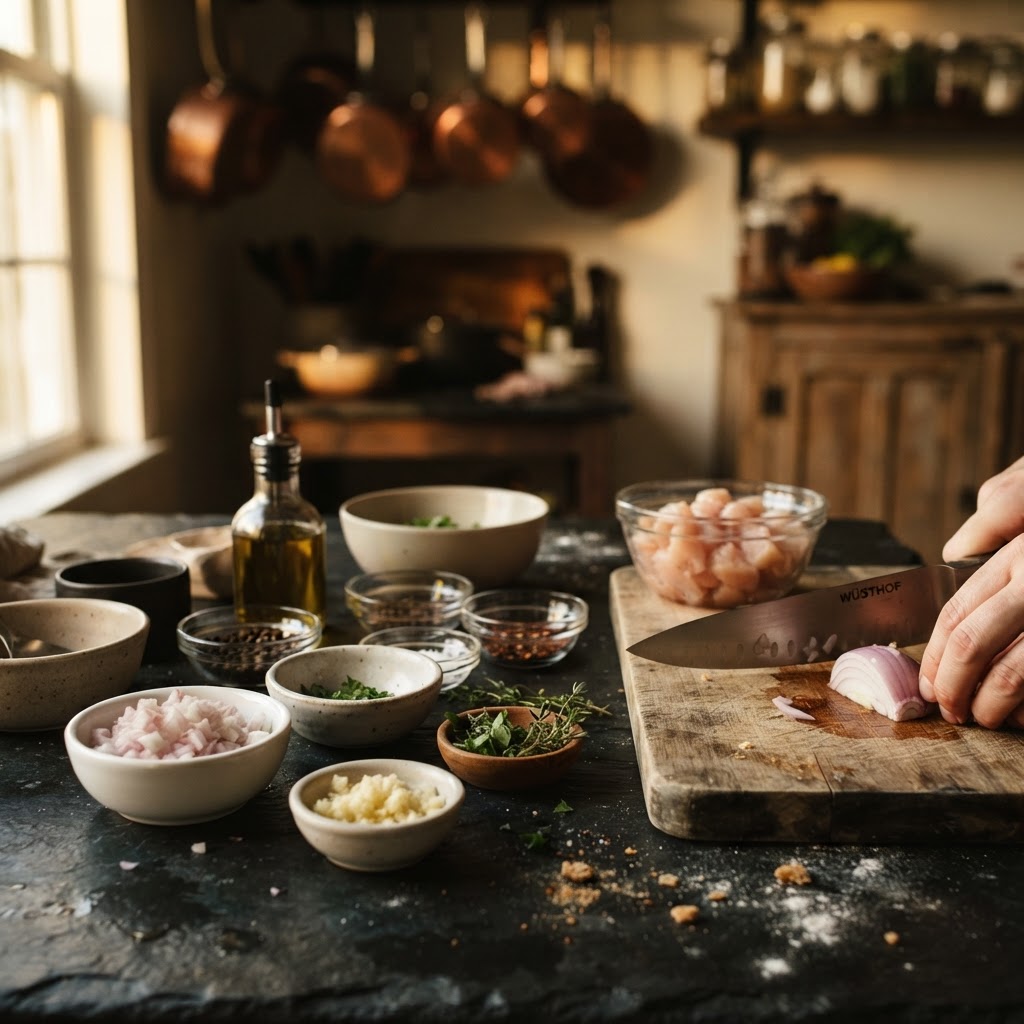
Mise en Place
French · everything in its place
Every ingredient measured, cut and arranged before the first pan touches the heat. In a starred kitchen, no chef begins a dish until the station is set.
Why It Matters
Most home cooking goes wrong in the scramble, not the recipe. When everything is within reach, you cook with your eyes and ears instead of the measuring cup, and timing becomes effortless.
Cook it: Involtini di Melanzane, Risotto agli Asparagi
Prep
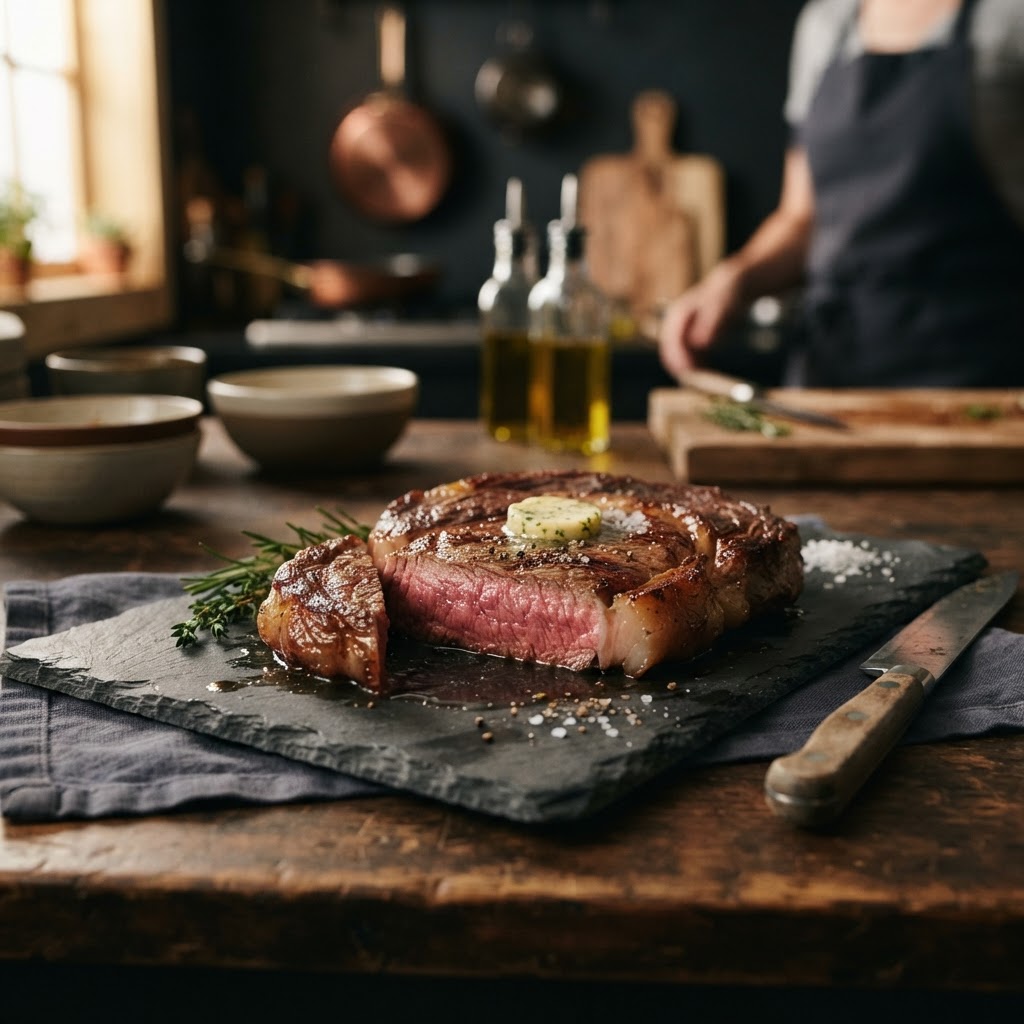
Resting Meat
Patience as technique
Letting cooked meat sit off the heat, loosely covered, for a third of its cooking time before slicing.
Why It Matters
Heat drives juices toward the center of the cut. Resting lets them redistribute, so they end up on your palate instead of the cutting board.
Cook it: Pan-Seared Duck Breast with Cherry Reduction, Tarte Tatin with Crème Fraîche
Prep
Tempering
Meeting heat halfway
Slowly raising the temperature of a delicate ingredient, whisking hot liquid gradually into eggs, or letting a steak lose its chill before the pan.
Why It Matters
Sudden heat is what curdles custards and greys the inside of a steak. Gentle transitions keep textures exactly where a chef wants them.
Cook it: Ojo de Bife (Ribeye Steak), Ugnstekt Lax med Dillcrème
See these techniques at work in the kitchen.
Browse the Recipes →